Throwing the pearl back into the sea
The return of Kino and Juana to La Paz is the final, devastating act of Steinbeck's parable, an event that transforms the couple and closes the narrative with a gesture of renunciation. After the gunshot that killed Coyotito, the family walks back through the town in a procession that the people of La Paz will remember for generations. Kino carries a rifle across his arm; Juana carries her shawl like a sack over her shoulder, and in it is a small, limp, heavy bundle—Coyotito's body. The shawl is crusted with dried blood, and the bundle sways a little as she walks. Her face is hard and lined and leathery with fatigue and with the tightness with which she fights fatigue, and her wide eyes stare inward on herself. She is as remote and as removed as Heaven. Kino's lips are thin and his jaws tight, and the people say that he carries fear with him, that he is as dangerous as a rising storm. The two seem to be removed from human experience; they have gone through pain and have come out on the other side; there is almost a magical protection about them. Those who have rushed to see them crowd back and let them pass and do not speak to them. Kino and Juana walk through the city as though it were not there. Their eyes glance neither right nor left nor up nor down, but stare only straight ahead. Their legs move a little jerkily, like well-made wooden dolls, and they carry pillars of black fear about them. As they walk through the stone and plaster city, brokers peer at them from barred windows, servants put one eye to a slitted gate, and mothers turn the faces of their youngest children inward against their skirts. Kino and Juana stride side by side through the stone and plaster city and down among the brush houses, and the neighbors stand back and let them pass. Juan Tomás raises his hand in greeting and does not say the greeting and leaves his hand in the air for a moment uncertainly. In Kino's ears the Song of the Family is as fierce as a cry. He is immune and terrible, and his song has become a battle cry. They trudge past the burned square where their house had been without even looking at it. They clear the brush that edges the beach and pick their way down the shore toward the water. And they do not look toward Kino's broken canoe.
The Act of Renunciation
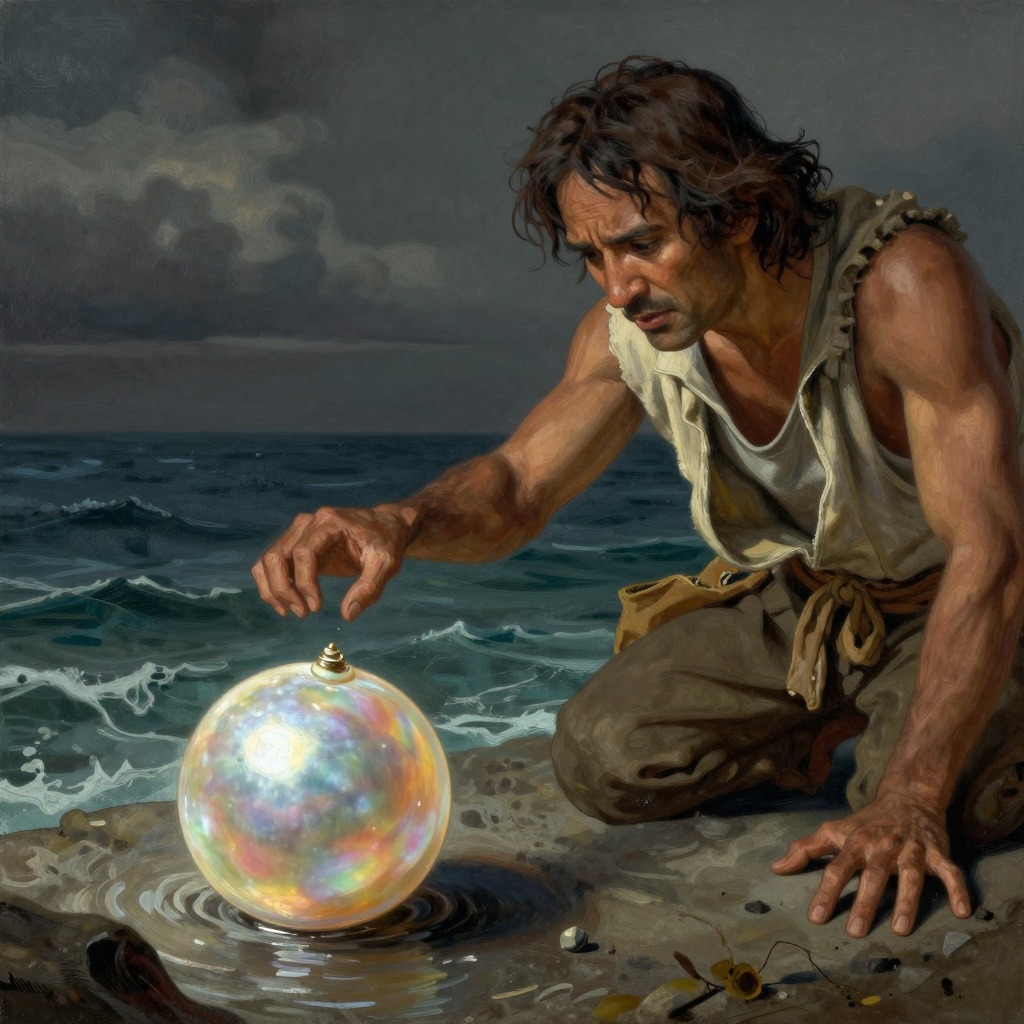
When they come to the water's edge they stop and stare out over the Gulf. Kino lays the rifle down, digs among his clothes, and then holds the great pearl in his hand. He looks into its surface and it is gray and ulcerous. Evil faces peer from it into his eyes, and he sees the light of burning. In the surface of the pearl he sees the frantic eyes of the man in the pool. And in the surface of the pearl he sees Coyotito lying in the little cave with the top of his head shot away. The pearl is ugly; it is gray, like a malignant growth. Kino hears the music of the pearl, distorted and insane. His hand shakes a little, and he turns slowly to Juana and holds the pearl out to her. She stands beside him, still holding her dead bundle over her shoulder. She looks at the pearl in his hand for a moment and then looks into Kino's eyes and says softly, "No, you." Kino draws back his arm and flings the pearl with all his might. Kino and Juana watch it go, winking and glimmering under the setting sun. They see the little splash in the distance, and they stand side by side watching the place for a long time.
The Pearl's Final Rest
The pearl settles into the lovely green water and drops toward the bottom. The waving branches of the algae call to it and beckon to it. The lights on its surface are green and lovely. It settles down to the sand bottom among the fern-like plants. Above, the surface of the water is a green mirror. The pearl lies on the floor of the sea. A crab scampering over the bottom raises a little cloud of sand, and when it settles the pearl is gone. The music of the pearl drifts to a whisper and disappears.
Thematic Significance
This event is the culmination of the novella's moral trajectory. Juana had earlier urged Kino to throw the pearl away, crying that it was like a sin and would destroy them. Kino had refused, striking her when she tried to cast it into the sea herself. In the pearl he had seen only his dreams—a rifle, a church marriage, an education for Coyotito—but those visions had turned to images of violence and death. Now, after the loss of his son, Kino himself performs the act of renunciation. By offering the pearl to Juana and then throwing it himself, he reclaims a measure of agency and acknowledges the truth of her warnings. The act is not triumphant but necessary; the pearl, which had become his soul, is returned to the sea, and the couple is left with nothing but each other and their grief.